
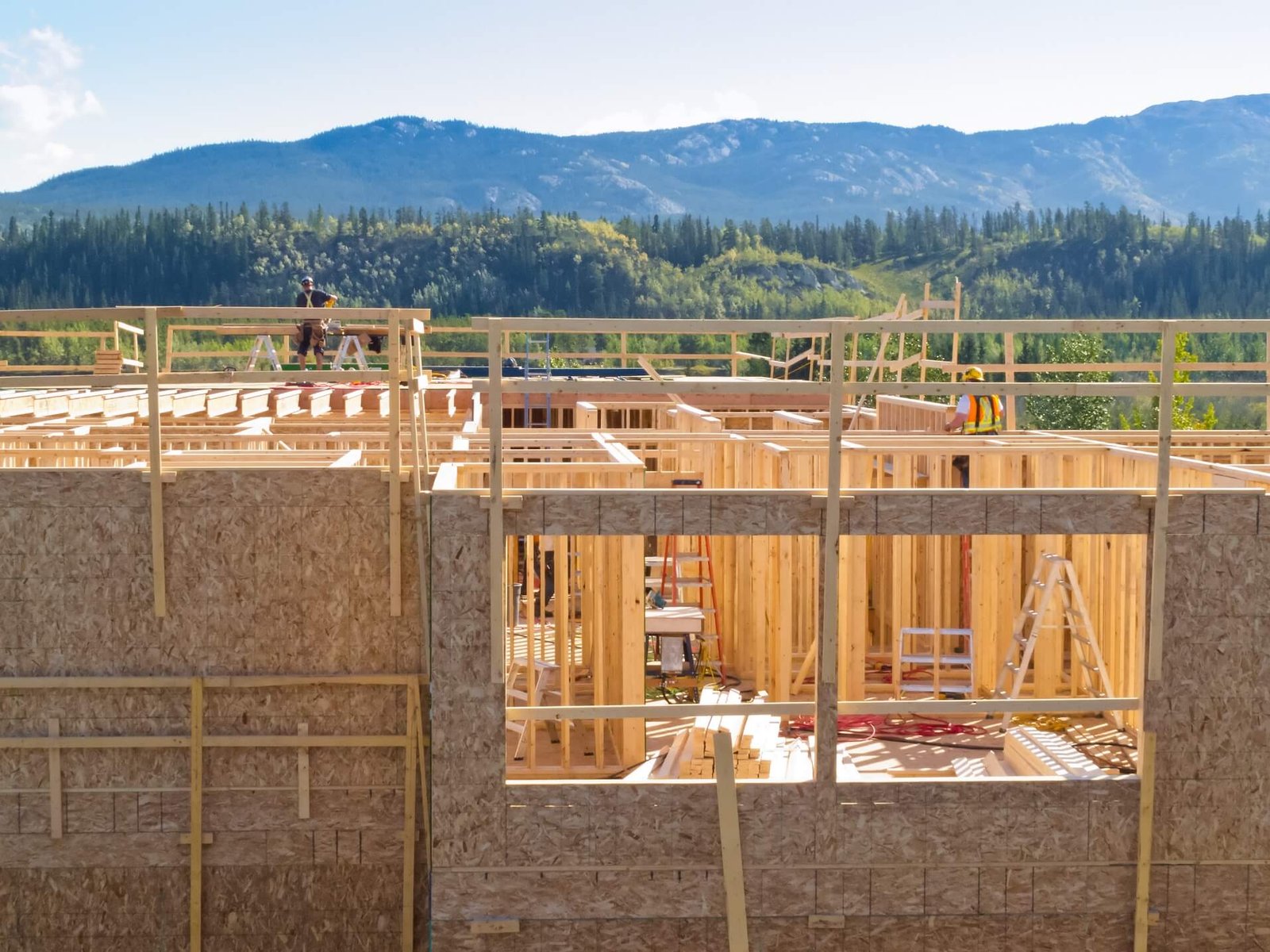
Residential development starts before there's a house to build, with raw land that has to become lots before anything vertical happens. We take on both halves: the horizontal work that turns land into buildable lots, and the vertical construction that turns lots into finished homes.
The types of residential development projects we take on
Ground-up subdivisions starting from raw, unplatted land are the largest category, but we also take on infill development, adding lots or small clusters of homes inside an already-developed area, where utility tie-ins and access are more constrained than on open land. Build-to-rent and small-lot single-family developments follow the same horizontal-then-vertical sequence as a traditional subdivision, just at a different unit scale and density.
How we build it
On the horizontal side, that's grading, earthwork, utilities, and site infrastructure sequenced so lots come online ready to build on, phase by phase rather than all at once. On the vertical side, it's the same general contracting and in-house trades we bring to any custom home or multifamily project, applied lot by lot across the development. Running both sides ourselves means the handoff between site work finishing and vertical construction starting isn't a scheduling gap where a development stalls waiting on two separate contractors to coordinate.
What drives the cost and the schedule
Site conditions drive most of the horizontal cost: topography, drainage requirements, and how far utilities have to be extended to reach the property all move the number before a single lot is buildable. Phasing strategy, how many lots get developed and built at once versus in smaller, sequential releases, affects both cash flow and schedule, and we help plan that sequence around how fast homes are actually expected to sell or lease. Entitlement and permitting timelines, which vary by jurisdiction, set the outer bound on when horizontal work can even start.
Coordinating with developers and lenders
A development's horizontal and vertical schedules both feed into a lender's or partner's draw schedule, and because we run both sides, we can give a single, consistent answer on where the project actually stands instead of two separate contractors giving two different pictures.
Building lot by lot without losing consistency
A development that builds dozens of homes lot by lot still has to deliver the same quality on lot one and lot fifty, and that consistency comes from using the same crews and the same project management across the whole development rather than rotating in whichever subcontractor is available for a given phase.
We are licensed and insured, with over 20 years of combined experience across land development and vertical construction, and running both under one team keeps a development moving instead of stalling at the handoff between site work and the first house.