
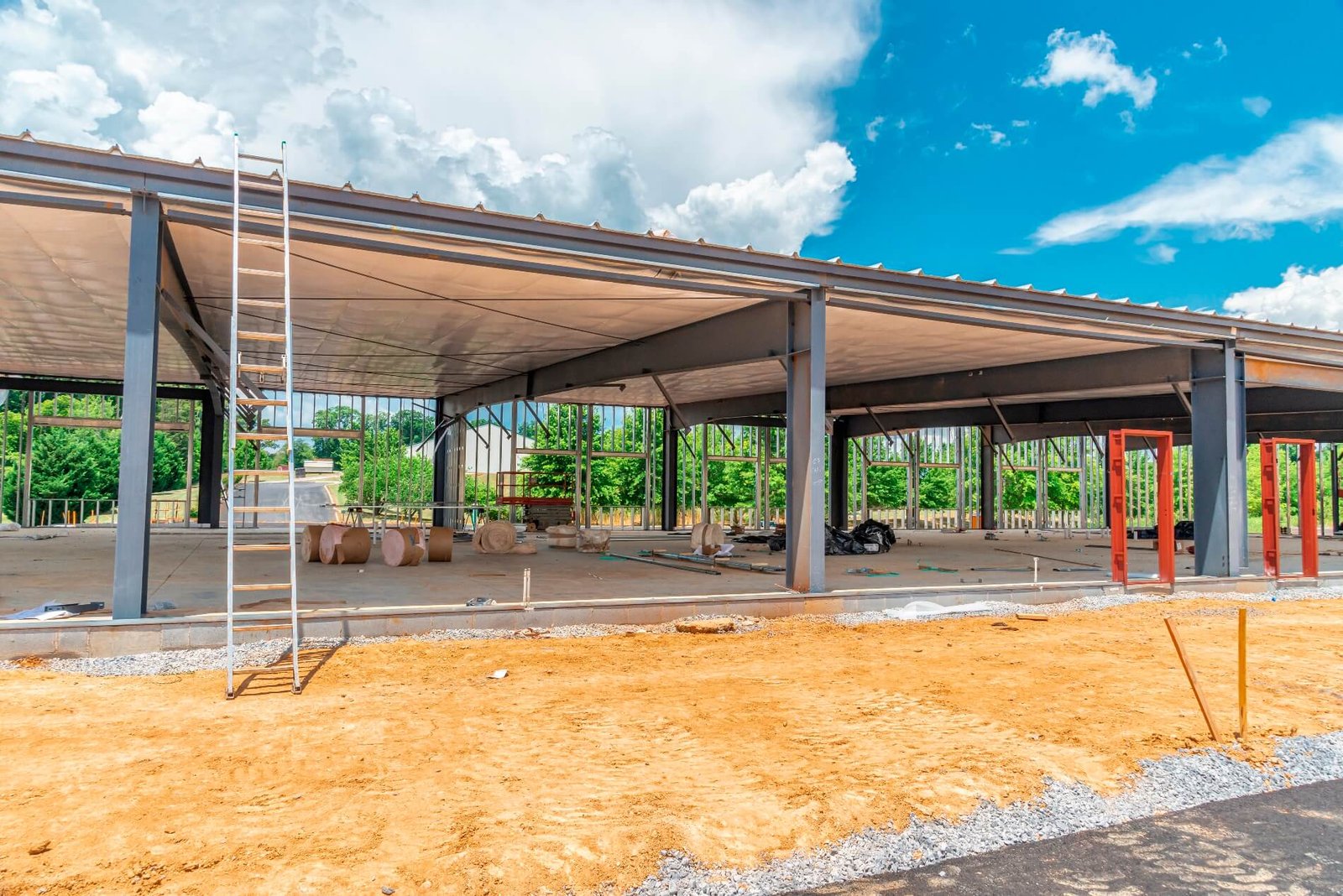
Hotels get built and renovated against a brand standard, not just a set of drawings, and that standard governs everything from the finish package to the punch list. We build hotels ground-up and renovate them in place, working to brand compliance from the first framing inspection through the final PIP walkthrough.
The types of hotel projects we take on
Hotel work breaks into a handful of distinct project types, and each asks something different of a contractor. Select-service and limited-service properties carry a tighter, more standardized brand package and a faster build cycle, with less back-of-house and public space to coordinate. Full-service hotels add banquet and meeting space, food and beverage outlets, and a larger back-of-house, which means more trades running in parallel and more sequencing between them. Extended-stay properties bring kitchenettes and additional in-unit finish into nearly every room, which changes the finish schedule more than it changes the structure. Renovation work, whether brand-mandated through a Property Improvement Plan or driven by ownership wanting to refresh the property, is its own category again: the scope is set by what the brand requires today, not by what the building looked like when it opened.
How we build it
On a ground-up hotel, we run pre-construction, general contracting, and construction management as one connected process, so the budget, the design, and the schedule get checked against each other before a shovel goes in the ground. Our own crews carry framing, drywall, paint, tile, and millwork through the corridors, guest rooms, and public spaces, the areas a brand inspects most closely before it lets a property open under its name. On a renovation, we sequence work floor by floor or wing by wing so finished rooms come back online on a rolling basis instead of the whole property going dark at once, and we protect the guest areas and back-of-house functions that keep operating the entire time.
What drives the cost and the schedule
Brand standard is the single biggest factor. A limited-service brand's finish package prices and schedules differently than a full-service brand's, and neither is optional once a franchise agreement is signed. On a renovation, the PIP itself sets most of the scope, and how far a property has drifted from that standard moves the number more than square footage does. FF&E, furniture, fixtures and equipment, runs on its own lead time and its own budget line, and a renovation that finishes construction ahead of its furniture is still a hotel that cannot reopen those rooms. Phasing work around a property that stays open adds real schedule time compared to the same scope on an empty building, a tradeoff that protects revenue at the cost of a longer calendar.
Where this fits with the rest of a hotel's life
Most hotels need this kind of work more than once: a ground-up build to open the property, then a renovation cycle every several years to stay current with the brand. We work both ends of that cycle with the same crews and the same project management, so a property we built keeps the same standard of accountability when it comes back around for its next PIP.
We are licensed and insured, with over 20 years of combined experience building and renovating hospitality properties, and we self-perform the finish trades that most often decide whether a hotel opens, or reopens, on the date the brand and the ownership group are counting on.